
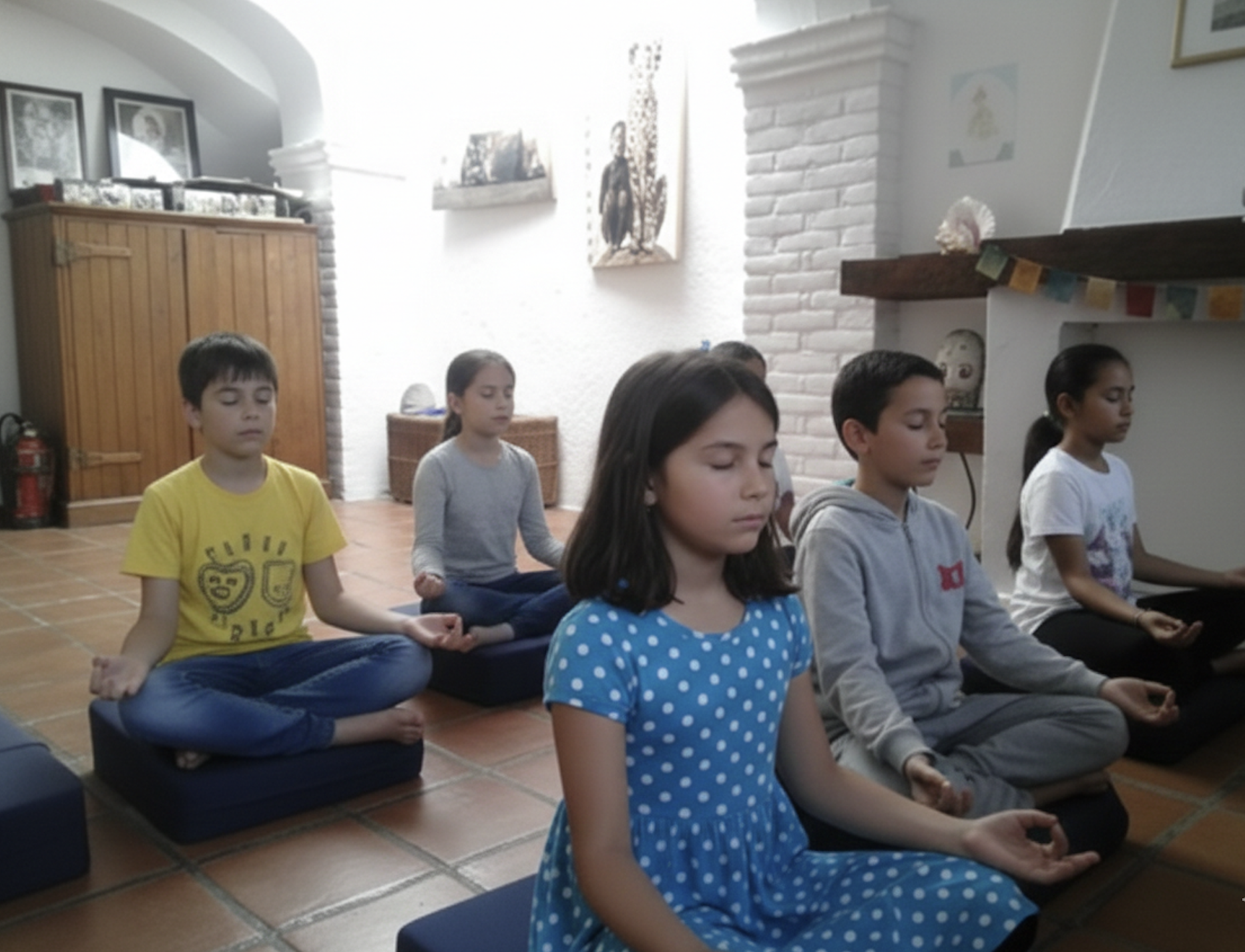
This school year has been one of incredible learning as a teacher, as a person and as a mom. Children challenged me and inspired me to become a better person. I learned from them to be a more patient, more caring and more present human being. I discovered that one can have a lot of information about a subject -in this case mindfulness- but it is not until you actually practice and make yourself vulnerable that the real learning sets in. I had the honor of teaching about 30 kids this school year with enough continuity, that we learned from one another how to be more accepting and inclusive. I was put to the test many times by challenging children who were rebellious and questioned the worth of our time together. But how could I teach mindfulness without acknowledging and respecting first my own emotions, my own insecurities, perhaps my feelings of inadequacy and at the same time not taking things personally. How could I teach mindfulness if I was being reactive in a non-mindful way? At first it was hard. The closer you are to a group of kids, the more like a family you become, with the good and the bad. Many a time I felt my heart pumping harder, my thoughts racing over my head as I was feeling offended by a child's behavior or words. Little by little, I realized I needed to practice what I was preaching, I realized one needs to acknowledge and accept one's own feelings before attempting to help others do the same. Children are translucid and see right through you. The challenging children were my biggest mindfulness teachers. Through them, I was able to feel my own tendencies to be reactive, and instead become more and more responsive. I believe that the best teaching takes place when you are truly practicing and learning together. For that to happen, there needs to be trust and care, and that is built over time. This year I became a teacher by becoming a student along with them, and that is how I learned how to practice and help them practice being present at the same time.
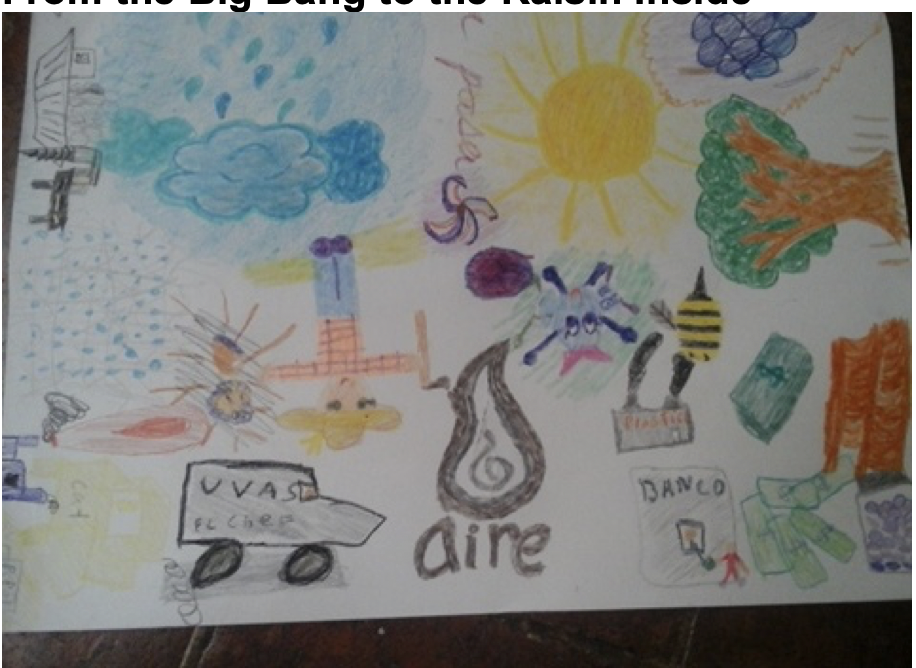
I am with a group of 9 to 11 years old kids. They are outrageous and creative and bold. I give the instructions for the mindful raisin exercise. As I pass out one raising per person, I ask them not to eat it, but rather to look at their raisin, its color, its creases, to see if they can find a small stem or where this used to be. I ask them to feel its texture, its softness or dryness. How does it feel? Then in silence, each person brings their raisin close to one of their ears and squeezes and listens to any sounds it might make. By the time they are smelling their raisins, they comment on the fact that their mouths are watering, and they cannot wait any longer to eat them. And yet, I ask them to stop and listen to the directions one more time. We are not going to swallow the raisin just yet, but rather chew it slowly, feeling how our jaw moves as we chew, how our tongue moves the raisin around our mouth, how we salivate during the process, and how the raisin turns into smaller and smaller pieces until we have almost nothing in our mouths. How does the tongue helps us to swallow? What happens when we swallow? As they use all of their senses, it seems as if everything is new. They comment on the fact that they really had not tried a raisin before, that this is the best tasting raisin ever. And yet, we are only half way into the exercise. I ask now to imagine how this raisin came to be. What had happened before we actually had it in our hands? I begin to give them ideas, on how perhaps a farm worker planted the seed in fertile ground. How the ground had to be prepared before hand, and what elements the plant needed to grow. They begin to make a group drawing, and before I realize, they are back all the way to the big bang. The whole universe, and eternity, it seems, is concentrated into our simple bag of raisins. A complex evolution of the agricultural, social and economical systems had to be developed (and described to me) for the raisin to be in our hands today. Once again, I feel humbled by how this group of children has taken this mindful exercise to a new level of awareness. They had opened my eyes in ways that I now really feel connected to the whole universe, to our ancestors, and those who are still to come. For the rest of the day, I walk more slowly, appreciating all that needed to happen for our world to be what it is. It makes me want to be more careful, gentler, more responsive. After all, how do I know the impact that my actions and my words today will have in millions of years from now?
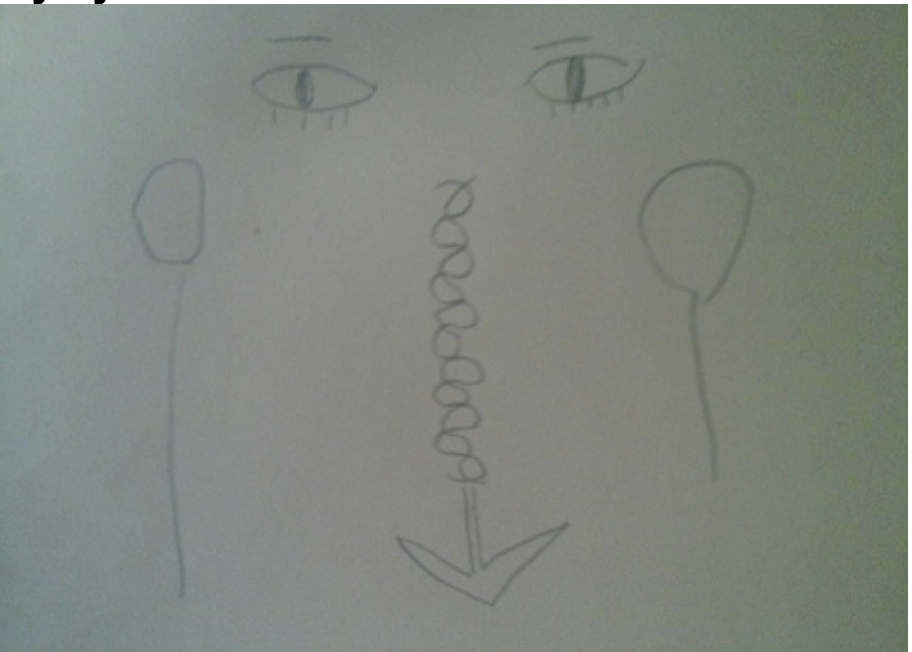
The experience of being human is such a fantastic one, and yet, we are most of the time so busy with our thoughts, our emotions, our tasks and to do lists, that we are rarely present to simply experience it and be. But my young companions are the exception - at least while we are in the mindful mood. Today is not the exception. We have talked about our breathing (represented by a young artist here as balloons); we have experienced where our breathing "anchor" - the spot in our body that we feel our breathing the most- is. And now, we are experiencing what it is like to look mindfully. Can you spot something different that you had never noticed before? What if you were an animal with really strong eyesight? By imagining and trying it out, their attitude is already changing. They look more present, more attentive, more powerful. My experience, personally and as a teacher, proves again and again that all we need is a reminder to be more present, to be responsive rather than reactive. But the reminder cannot always come from outside but from within. This is why establishing a daily practice is nothing short of essential. I give them homework; For now, it is their external reminder so that these short practices can become habitual. For the most part, the homework is a successful one. For my older students it comes very handy when feeling overwhelmed or scared. Their anchor makes them smile, their strong and focused eyesight makes them confident. Once more, the experience of being human is waking up.
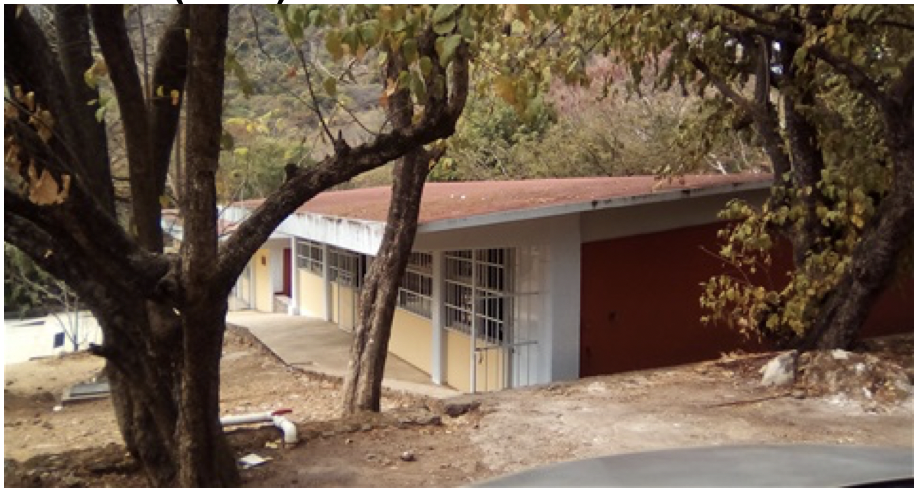
I chose to introduce mindfulness to one of the local public middle schools, where most students come from very traditional families in town. These families have literally been here since before the conquistadores came, and even though there has been a lot of syncretism, they still see those of us who have no roots here, as outsiders. I am diving into a school and a school age group that I am not very familiar with. So, I am more than two times the outsider, bringing a very foreign concept into the school. Historically, this town has -and still is- very suspicious of others. Being so close to Mexico City, it has been a hard battle, as it is in most of the traditional towns in Mexico.
Having an ancient ceremonial center and ruins on the peak of one of the surrounding mountains, it is considered an energetic center, so it has been a magnet for hippies, Krishnas, shamans, esoteric groups among others. Needless to say, the locals are even more suspicious of anything new that might seem to have any of these elements. Unfortunately, drugs have had an easy pass into town. Both, "ceremonial" drugs and others are easily accessible, in a town that is torn between keeping alive the ancient traditions and having no much "allure" to offer to its youth.
I chose to work with the most alienated age group as I believe mindfulness might be a preventive measure in a town where addiction recovery groups are all too common.
This particular community got hit very hard by the earthquake that shook Mexico on September 19, 2017. I was their age, also in middle school,when the '85 earthquake hit Mexico City, but when I think back at it, I feel as if I had been even younger as I felt so volnerable. I am guessing these kids are feeling just as vulnerable, if not more than how I felt back then.
On December 8th, as I walked into the principal's office, to let her know I had arrived for my first meeting with the kids, she is sitting with a girl who is crying as she reports about an incident in the classroom. After some questioning by both of us, Maria (ficticious name) tells us that she can't focus in her school work. She is used to having 11 or 12 different teachers, as she was in middle school in New York. But her parents, fearing the worst under the Trump's administration, decided to send her and her younger sister back home to Mexico to live with their grandma. Two months later, we get hit by a very powerful earthquake. She is at school when it happens, on the second floor. She recalls how she thought the staircase was going to collapse when they were evacuating the school. She was lucky, her classroom is next to the staircase. Others panicked as the hallways bottlenecked. Some jumped over the railings.
Maria tells us that she feels as if there are so many earthquakes still happening constantly, and that she thinks something is going to happen to her parents in New York. She imagines buildings collapsing on them.
Today, I teach her how to breath, how to be aware of the sensations in her body when these episodes happen. I show her how to calm herself down through the butterfly hug. I tell her thoughts are just thoughts, not the reality, and that we can let them pass. She thanks me as she hugs me and cries in my shoulder. I know why I am here!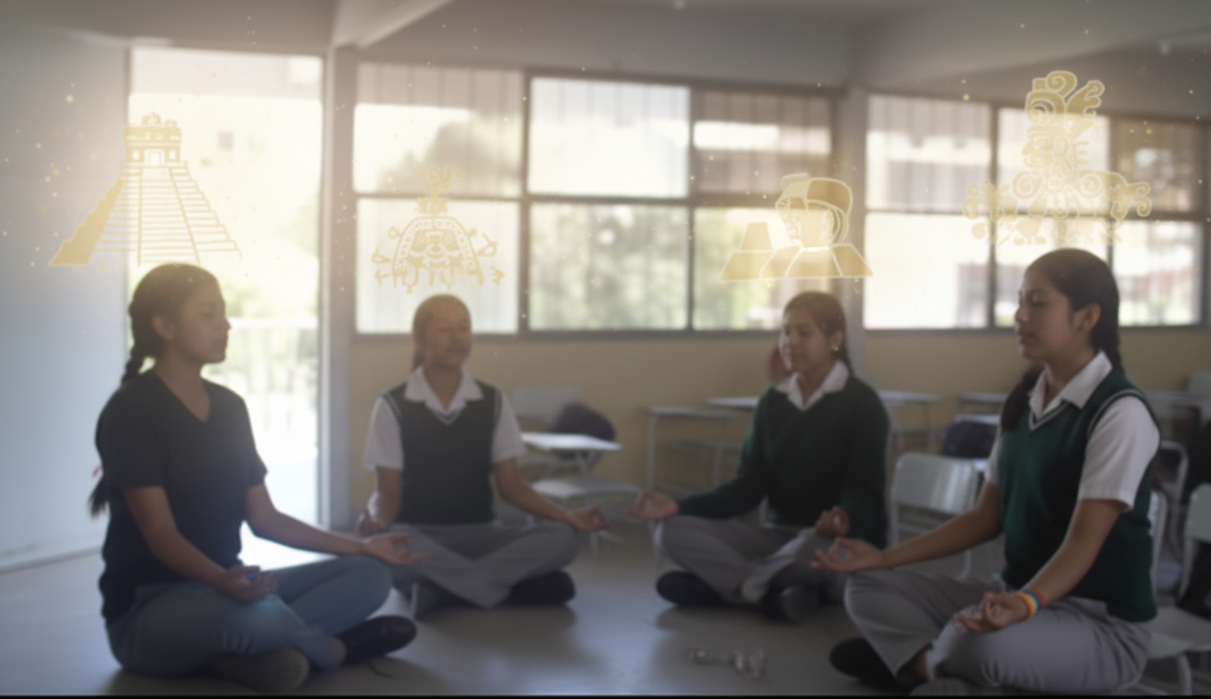
I volunteer as a mindfulness teacher at the local middle school in the rural town of Tepoztlan, Mexico, where we relocated almost three years ago. I see my volunteering work as my humble way of creating bridges of understanding and setting the foundations for social justice. To be truthful, I am definitively more privileged than my students. Even though I come from a low-income background, my parents made many sacrifices so that my siblings and I could have access to a great education. I have more privileges than my mom did, as she only completed her elementary school education, and now that I live in Mexico again, I know that my European heritage -mostly latin- grants me privileges than otherwise I wouldn’t have.
This is the world we live in. Here in Mexico racism is so engrained in the culture and is not even acknowledged. It is a given, and that makes me deeply uncomfortable. My mindfulness students, do not have the privileges of a great education, European heritage, being bilingual, attractive to Western standards or light skin. I am perfectly aware of the privileges I have that they don't, and in fact, this is part of the reason why I volunteer to teach mindfulness to them. I am keenly aware about how different they see me from themselves, and yet, I also know that they have sensed my authenticity and warmth. They know I see them as individuals, that I recognize them and see what connects us, which is my humble way of empowering them. They know I deeply care and that I want to inspire them to be the best they can be. I have grown to love them, we have bonded even though they have only seen me once a week for the last 8 months. Most importantly, they trust me, they feel completely safe with me, and I wish I could do even more for them. But they know they can reach out. I am there, and we live in the same small rural town, so they can find me if they need me.
I believe in education and dialogue as ways to erase the prejudices we might have of one another. I also believe in empowering others through tangible tools, such as mindfulness. In my most recent interaction with my students, I talked about what connects us as humans in spite of the fact that every person has unique experiences. I told them about the “negative prejudice” and how that helped our ancestors to survive, but how now we have the power to focus on gentleness, compassion and kindness toward one another and ourselves.
My journey since I was a little girl was one that helped me to approach others with the awareness of our differences, but finding even more common ground, the human experience, that connects us. My parents exposed us to experiences that involved those who were less privileged than us. I am not sure they did this on purpose, but since we couldn't afford fancy vacations, we would go camping at a beach where fishermen families lived in sticks huts at most. They were from African and indigenous origins, and they adopted us as their family and opened their hearts to us in such ways that prejudices dissolved. As a modern dancer during my teen years, I was also close to the gay community, and our close interactions dissolved the deeply engrained bias I had.
I have always been a "newcomer," from the indigenous community in Chiapas, Mexico where I started a community-based middle school, to the Navajo reservation where I've volunteered holding dialogues of understanding and empowerment, to Hispanic immigrants at the public schools where I taught in the U.S., and to white middle and upper class schools where I taught Spanish in Virginia and Philadelphia.
In my experience holding dialogues for most than two decades in many places around the world, there is nothing more empowering than knowing that your voice matters and counts, that your thoughts and experiences can enrich others' perspectives, and to realize that you have so much to contribute throughout your life time. I feel very supported through my practice, my Shambhala Shanga here in town. I now know that being not so "privileged" in some areas, have contributed to my being more able than most to build bridges of understanding, the pedestal for social justice.
Thank you for your continuous support!
Sincerely,
Cecilia
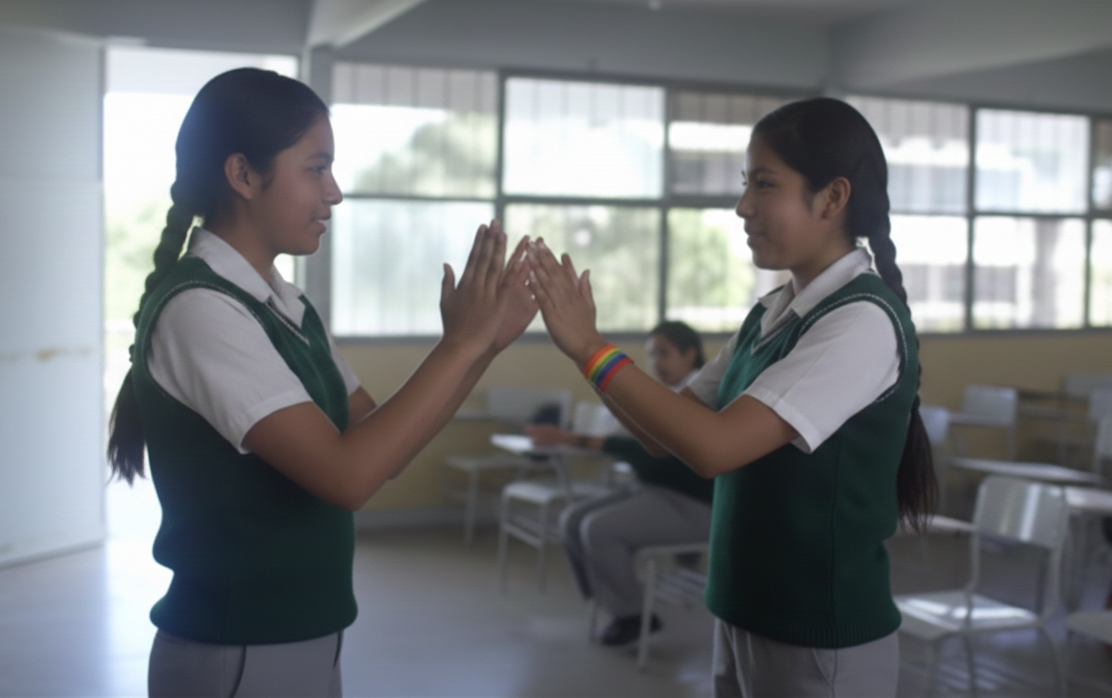
I just shared a piece with you about my mindfulness adventures with kids, and then, I had a wonderful experience the day after (this last Friday), that I thought it was worth sharing. As I walk into a group of 8th graders at the public school where I volunteer as a mindfulness teacher, two girls on the back corner ask me point blank: “What do you think about girls who kiss other girls?” My whole agenda for a body scan lesson goes out the window. Instead, I switch gears and tell them we will talk about judgment and will discuss the question at the end of the lesson. They agree. I begin my lesson with the Chinese proverb: “Good luck, bad luck…” and before I can complete it, they all yell out as they break into laughter “Who knows?” Yes, we are three weeks short of the end of the year, but in the 8 months I have worked with these kids I have never seen them so animated. They had been so shy to even speak when I ask questions. This seems to be a completely different classroom. How do you know the proverb? I ask. It turns out one of their teachers had mentioned it in a different context. Dralas… “Do you know the story behind it?” I ask as I imagine them telling it to me, but no, they haven’t heard it. So I go on to tell them about the old man who lost his horse and whose neighbor tells him what bad luck that is; and how a week later the horse comes back with a heard of horses, which in his neighbor’s eyes is good luck. And how the old man’s son brakes a leg trying to tame a horse, which seems to be bad luck, but then how when the army comes to recruit all young able bodies, his son stays behind… So is our experience, we can think that something that we are going through might be really “bad luck” but then how overtime this might have a positive outcome in our lives that we couldn’t have foreseen. I share with them a bit about my upbringing, some of which I shared in my post on Social Justice, and how what had seemed to be a really difficult upbringing to me, had made me a very sensitive person toward social justice and how throughout my life I had worked to build bridges among people from different backgrounds. I then guided them through a meditation period. We get too easily caught up in the heat of the moment and fall back again and again in unhealthy patterns that seem to “entertain us.” But in practical terms for these kids, let’s get curious about our emotions and stay with them, embrace them so that we can respond rather than react. And let’s observe how our judgments about a situation color our experience of it. We close our session with a few minutes of breathing. At the end the kids tell me “I relax them” and that they love the experience. But they insist on having the conversation about girls kissing other girls. They really want to know if it is a good or a bad thing. They are sincerely confused. They express they want to know is if it is ok to be curious about kissing other girls. “In other words” they ask, “is it bad to be lesbian or gay?” they blurted out. I tell them I can only share my experience with them, I am not trying to convince them about anything. In my mind, I can see parents complaining of the crazy teacher who is putting bad ideas into their kids. I start by asking them if it is bad to be a girl or a boy. Is it bad to have darker skin color, to come from a low-income family? I tell them I believe we need to be careful about how we judge others. Sexual orientation is not something that we choose. Some share that they have uncles or aunts that are gay. I share with them anecdotes from all the loving gay families I’ve met. They question what kind of psychological damage that have in their kids. In my head this is not an issue, but unfortunately in theirs, in a dominantly catholic country, in a very traditional town, it is. I explain how having a loving family or a loving parent is more important than their sexual orientation. We all grow up with different scars and being heterosexual doesn’t guarantee we don’t. There is domestic violence, extreme poverty, addictions, abandonment and many other circumstances that leave us with scars. Growing up with parents in a respectful, committed loving relationship regardless of their sexual orientation, preferences, likes or dislikes is beside the point. They ask what to do if one doesn’t have their parents’ approval, if they don’t support you. We speak about being compassionate and understanding. I share with them how my mom grew up with a certain set of religious believes. To this day unfortunately, this is a conversation I cannot have with my mom. I have tried, I have shared with her loving stories of wonderful couples. There is nothing I can say that will change her mind. To me it is shameful that this is even a consideration. But we need to have these conversations. Young people crave them, older folks need them, our world will definitively benefit from them. Do we realize how harmful judgments can be? Can we build community, change our brains, to change the world through respectful dialogues. Mindfulness brings about a unique awareness that I would argue is the perfect predecessor to good compassionate dialogue. There is so much work to be done, so many more dialogues to be held. Thanks for reading! Cecilia
For those who haven’t read my previous posts, I volunteer as a mindfulness teacher at our local public middle school. The principal gave me the most problematic groups in the school, for a total of about 130 kids each week. They gave me a group of 7th graders, one of 8th graders and one of 9th graders, which is what corresponds to middle school in Mexico. These lower income kids behave as teens all over the world do. They are rambunctious, full of energy, irreverent, rebellious, and they love to joke and make fun of one another –including the adults that teach them-. After all they are in their puberty and the adolescent brain is not fully developed. Recent studies have shown that the emotional area of the brain develops fully during the teen years, while the pre-frontal lobe –the area of the brain that help us have self-control, inhibit impulses, be empathic, make sound judgments, set goals and priorities, among others- does not fully develops until our mid- 20’s. Last Friday, when I arrived to my most challenging group, I lost my patience with them. Most of them were talking as if I were not there. Another pulled out his guitar and began to make noise with the chords. I am known to have a very loud voice, but no matter how loud I spoke, there was laughter, chair noise, notebooks being passed around and 44 other kids that were speaking just as loud. It was a particularly sensitive day for me. I had prepared a special lesson for them, including movement, and I stopped in my way to pick up a bag of raisins for the raisin meditation I was about to offer to them. On top of that, I arrived early, hoping I could get back on time to my preschooler’s traditional dance presentation at school. I paused and was quiet for a bit, to see what was going on and see if they would acknowledge my efforts. I finally spoke out. And as my voice raised, theirs lowered and there was finally silence in the room. I told them I felt I was wasting my time, my energy, my resources by coming to a group that was not only disrespectful but even more, totally uninterested to what I was trying to share with them. I told them I wanted to share something that was very meaningful to me. I said how much I cared for them and that I appreciated they were opening more and more to me, but that when they were sabotaging my class, or any other teacher’s class, they were only sabotaging their own learning and opportunities to grow. Yes, I prepared, I stopped at the store, I thought about different exercises they would enjoy. “You will graduate soon, -I told them- and go on to high school, perhaps, and how about all the lost opportunities because you wanted to be the joker, to get the attention of others, or to go along because that is the cool thing to do. Or not to do anything because you don’t know how to stand up for yourself. Is this what you want? I care, and I know you deserve more.” Their attitude, the same that is pervasive with all teachers that enter their room, speaks of how they feel about themselves. I could actually feel compassion for them. I was more upset for them than for me. After all, I love my life, I am passionate about everything I do, I love children of all ages and enjoy so much been around them. I used to be intimidated by older kids, but not anymore, I believe my Shambhala training, my view of the world, my growing compassion for all sentient beings, has helped me to be centered, sure of my footing and how I can be of service to others. I am not giving up on them. I care for each one of them. Yes I do. Sincerely, Cecilia
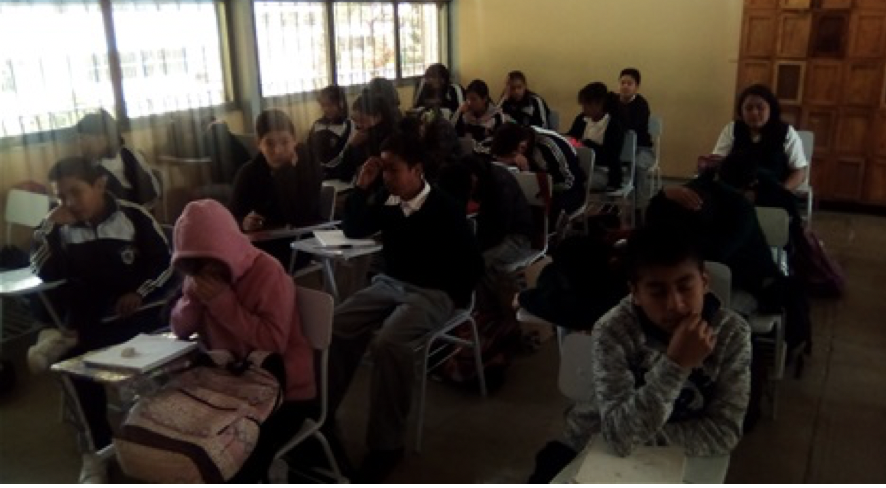
As some of you know, I have been working offering mindfulness to the local public middle school students for the last few months as a volunteer. Our rural town is still very divided, and even though some mornings we can see the not-so far away Popocatepetl volcano’s exhalations, it feels as if the unsettling emotions that the earthquake brought, have come down. And yet, my students are struggling with many issues at home and school. Every week, they open up a bit more. Some have come up to me to hug me, they clap when they see me, and joyfully say hi to me when they see me in town. Some have written short notes to me telling me personal things that are troubling them, or asking questions about their practice, such as how bringing awareness to their breathing actually makes them utterly uncomfortable. We are covering good ground from being aware of our emotions to feeling the sensations that these come with, and how our breathing can be our anchor. And some days are harder than others. I am not in the perfect environment. I have three groups of 44 kids each, crammed in small darkish classrooms, all in rows, all wearing distasteful uniforms. It feels like the real world, not a manicured pretty school with small classrooms, but rather the opposite. None of them had ever heard of mindfulness. Why is mindfulness not more available to people of color? Why do we put resistance to the rebellious natures of teenagers? I am learning more about myself and my practice, my ego, my own emotions and how I take things personal than I had ever before. I want to continue doing this work. I wish I could get a journal for each child, I hope I could continue this commitment with this school that have been incredibly receptive and appreciative to my work. I love that they allow me to come once a month to give a small session to the teachers so we can talk about being compassionate and being authentic to our students so we can spark curiosity and wonder. I thank you so much for all the Democracycafe.org supporters from the core of my unquivering heart. Sincerely, Cecilia
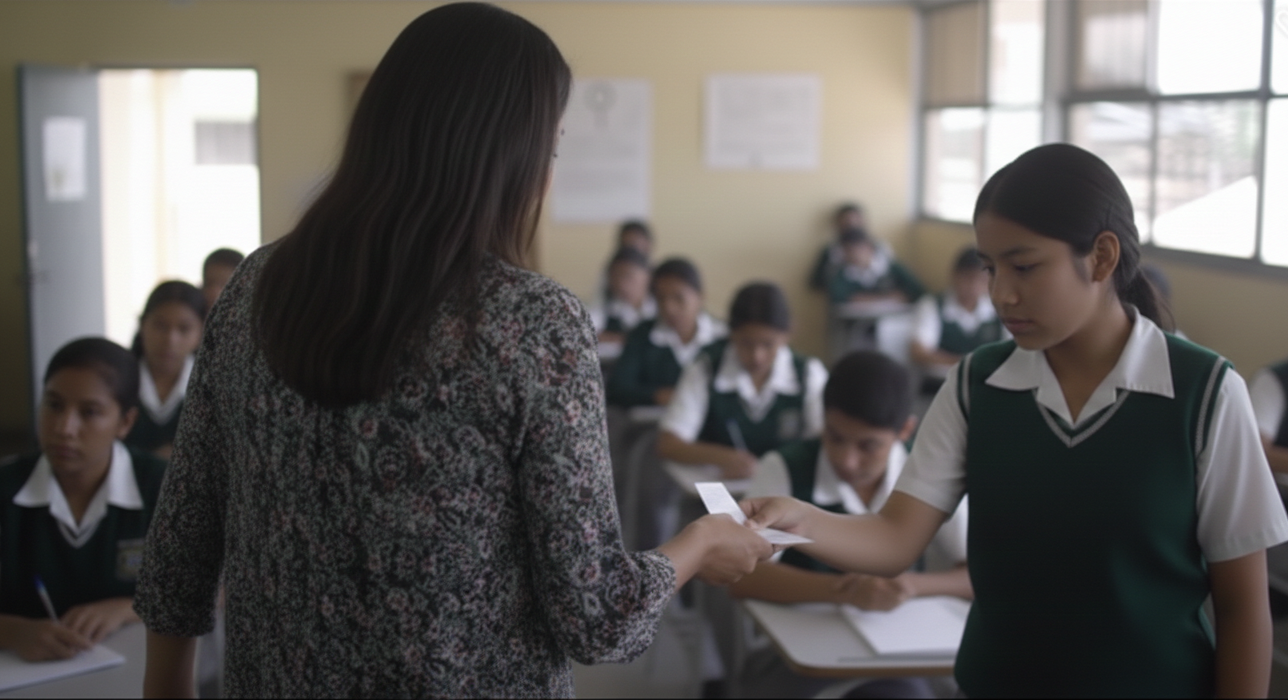
It seems like my volunteering work as a mindfulness teacher with the local public middle school is touching a chord. Every week, when I visit the middle school, I sit back for a few minutes and observe these teenagers. They seem to me like the epiphany of human suffering. I also recall my teenage years as feeling so awkward, so self-conscious, feeling the pressure to “fit in” and perhaps even doing stupid things to please others. I remember exploring who I really was, what my clothing style was, even risking looking ridiculous or not myself trying to being other than who I knew I really was. As my older daughter approaches her teenage years –she is 11, gulp!- I can begin to see this painful stage in her. She doesn’t like toys anymore, today she decided to buy some make-up, and I found myself being careful not to discourage her from exploring who she is, and at the same time helping her find her own way, and making sure she feels good and confident about herself and her choices. After 3 months of working in mindfulness with the local teens, they know they are safe with me, they are beginning to trust me, they are opening up to me. The teacher that walks me to their class, calls on one of the boys, a boy that has caught my attention before, as his face is very charming and he is always smiling. She is worried about him. He bites his nails so hard that some of his fingers are a bit deformed. She asks him to lift his sleeves, and I can see teeth marks. He is biting his arms now too. He tells me he worries too much about school grades. At the moment I feel unequipped to help him. After all, I am not a counselor. I tell him to remember some of the exercises we have practiced in mindfulness, how to simply label your emotions as pleasant or unpleasant, how to be aware of one’s sensations and just stay with them, how to come back to his breathing when he catches himself biting on his fingers and arms. Count your breathing. We have our 20-minute session, but we really only sit for about 6 minutes each time. Two minutes at the beginning, 2 in the middle and 2 at the end. Most of them are quiet and can follow the exercises. But I also have to watch my language as some words are quickly used as puns or double entendre with sexual undertones. These are called “albures” in Mexico, and are very much part of the culture. They are not shy about it. If anything, it seems to be the cool thing to do. We all enjoy it. I know these are the only quiet moments in their whole week, so I remind them to use the techniques at home, when they are tossing and turning trying to fall asleep, when they feel anxious or overwhelmed, even when they are eating, they can do it mindfully. As I walk out of the room, a girl, perhaps too self-conscious to ask in front of her classmates -43 of them- hands me a piece of paper. She wrote in it a couple of questions for me. “How can I keep my emotions at ease when there are so many family problems around me, and How can I feel good about myself?” As I read them, I feel compassion for her. I wish I could turn around and hug her. As it is, I am taking too much time away from their English class, and I have two more classrooms to go to. I also feel a bit inadequate, not about myself, but to say the right thing. She obviously thinks I can help, and feels safe to ask this of me. She knows I won’t judge her. She knows I care. Her experience is one that all human beings have experienced. We hurt others because we think this will make us feel better, because we are afraid, because our ego gets in our way. We see ourselves separate from others, and yet we are all intertwined. I can hold my seat, feel compassion for myself and others, realize that we all share these painful experiences, open our hearts to our own pain and the pain of those around us, and us pain and all, warts and all. It is our humanity that makes us so special. We hold a very special place in the world, have so much dignity, and we are part of something bigger, much bigger. Each of our actions impacts the world around us. If we act mindfully or with this awareness, our ego and suffering can dissipate. Even though we really feel those intense emotions, they have a special energy that can be transformative and can be transformed into something beautiful. Cecilia
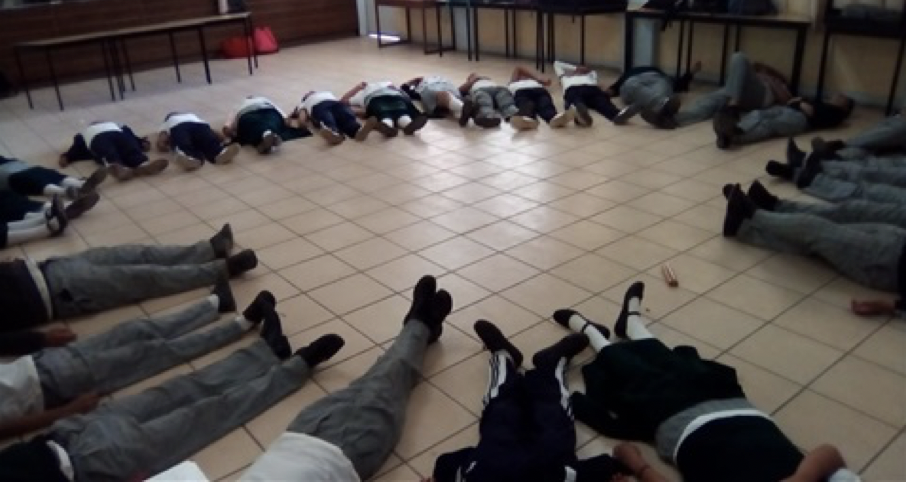
Today was my last Mindfulness session of the school year with the middle school students. From the three classrooms that I was assigned as a volunteer, one of them, a class of 8th graders, particularly transformed beautifully during the seven months that I worked with them. This is the project I chose to do as part of my year-long teaching training through Mindful School. As we enter the school library and sit in a circle on the floor, I thank them for their disposition throughout the months that we have worked together, for opening their hearts to me. The words flow from my heart, I didn’t prepare a speech, but I am reflecting along with them on how when we don’t put resistance to others, but rather open our hearts to the opportunities that life brings us, we benefit and grow. When we put resistance, we miss the chance to be transformed. The previous week, we reflected on the universe that gives us a vision for our life, that allow us to see possibilities, and on the other hand to feel the ground that supports us, that gives us life. We are in between both, and our practice allows us to take our place on Earth with dignity, and to bring into fruition our hopes and dreams. Today, I invite them to be grateful for everything that supports our life, from our ancestors to our parents, our teachers for the knowledge they share, for nature that gives us food, water, oxygen, the sun that gives us heat and light. I invite them to feel the vitality within them. I ring my bell, and invite them to lie down, close their eyes and relax, to feel the sensations in their bodies and to relax if they feel tension or resistance to letting go. I invite them to feel their heart pumping and to imagine how it first need to relax to nourish itself, to fill in, before having the strength to powerfully contract and send out blood to every cell throughout their bodies. I remind them to be thankful for the elements that give us that vitality. And now we will send love to ourselves. In order to give the best of us so that the world doesn’t miss on our potential, se need to first be well, strong, happy… May I be happy… may I be joyful…may I be healthy… may I be in peace. I tell them to do something similar every time that they feel down on themselves, when they feel sad, and to remember that I believe in them, that I know they have all the tools and all the potential to be happy, to change the world. I know they will. At the end, they want to tell me what they have learned throughout this journey together. “I have a better relationship with my mom since the day you told me there is a moment between the impulse and the response. Now I respond rather than react.” “When I have insomnia now I can focus on my breathing, let go of my thoughts and fall asleep.” “I fell asleep today, I noticed I am carrying too much, I needed this, you always relax me.” “I now enjoy life more by paying attention to the sounds, the food I eat, the steps I take.” “I have learned to connect my mind with my body through my breathing, would you please come back and teach us how to meditate?” I thank them for this opportunity, this is a last and a beginning, life is always like this, moving, I learned from them, I grew, I am better for it.